If you’ve ever picked up a copy of Middlemarch, Bleak House, or The Woman in White, you’ve likely noticed one thing immediately: these books are massive. For modern readers, the sheer page count of Victorian literature can be daunting. But did these authors simply have a lot to say, or was there another reason for their verbosity?
The answer lies not in artistic choice, but in cold, hard Victorian economics. The sprawling nature of classic English novels is largely the fault of a publishing format known as the “three-volume novel,” or the triple-decker.
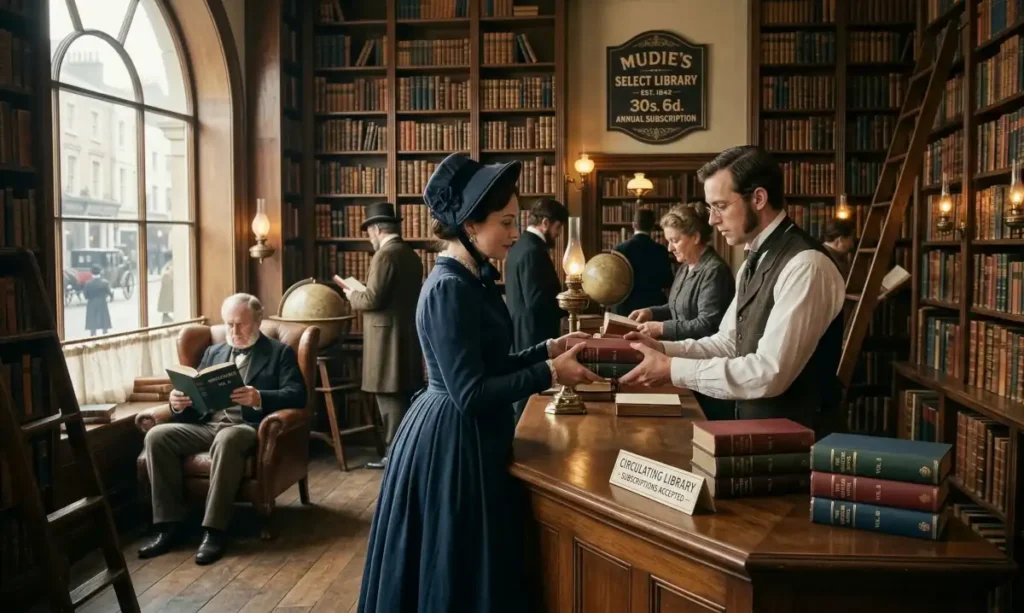
The Reign of the Circulating Library
In 19th-century England, books were a luxury item. A newly printed novel cost around 31 shillings and 6 pence—roughly equivalent to a week’s wages for a skilled clerk. For the average reader, buying a book outright was completely out of the question.
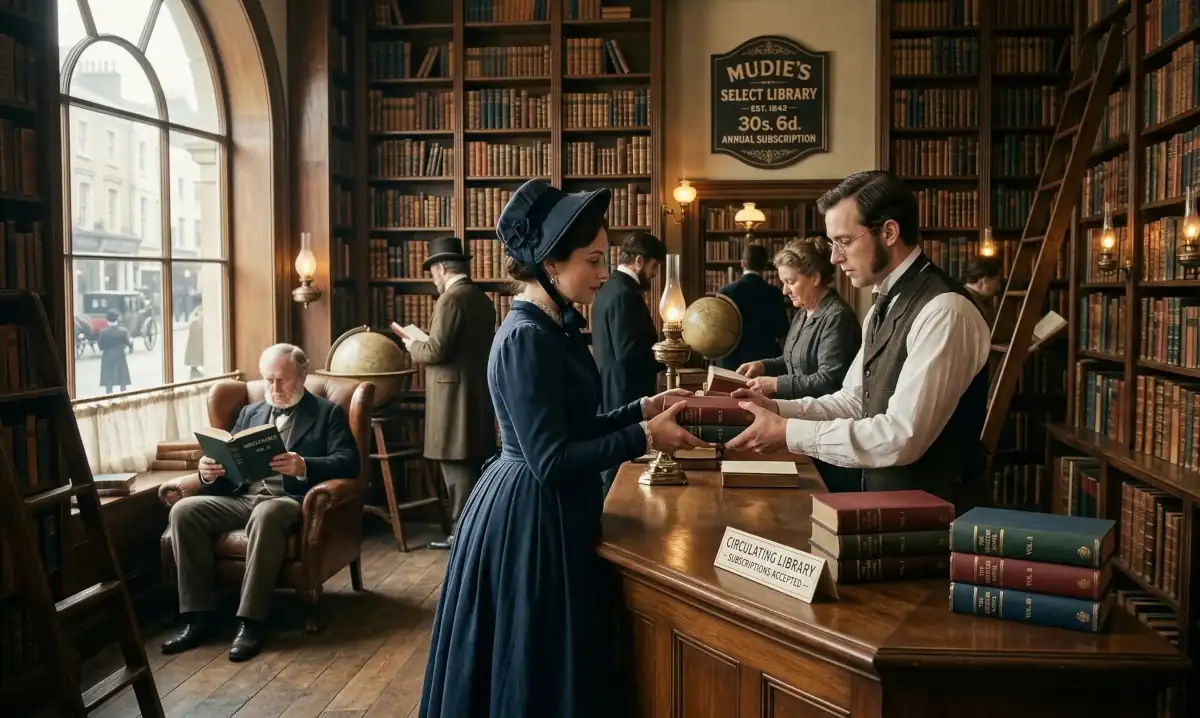
Enter the circulating library. Businesses like Mudie’s Select Library changed the reading landscape forever. For an annual subscription fee of one guinea (21 shillings), readers could borrow one volume at a time, exchanging it as often as they liked. Mudie’s became a monopoly, and because they were the primary buyers of fiction, they had the power to dictate exactly how books were published.
The Economics of Three Volumes
Mudie’s and other libraries realized a brilliant, if frustrating, business strategy: if a novel was split into three separate physical books (volumes), three different subscribers could read the same story at the same time.
Furthermore, the libraries demanded that publishers stick to this format because it justified their high subscription fees. If a reader wanted to find out how a story ended, they had to keep their subscription active to check out Volume II and Volume III.
| The Mudie Mandate: Charles Edward Mudie wielded so much power that if he refused to stock a book because it was too short, too controversial, or not in three volumes, the book was almost guaranteed to fail. |

How the Triple-Decker Changed English Literature
Because publishers were forced to stretch stories across three separate books, authors were forced to adapt their writing styles. This economic quirk directly shaped the hallmarks of Victorian literature:
- Pacing and Padding: Authors had to hit a specific word count to fill three volumes (usually around 150,000 to 200,000 words). This led to lengthy descriptions of landscapes, elaborate philosophical digressions, and extensive character backstories.
- The Cliffhanger: To ensure readers would return to the library for the next volume, authors perfected the art of ending Volume I and Volume II on massive, suspenseful cliffhangers.
- The Subplot: To pad the length, authors introduced a sprawling cast of secondary and tertiary characters, giving them their own complex side-quests and romances that intertwined with the main narrative.
The Collapse of the Three-Volume Empire
The era of the triple-decker lasted for over half a century, heavily influencing writers from Jane Austen (whose later works were formatted this way) to Thomas Hardy. However, by the 1890s, the system began to collapse.
Cheaper printing technologies, the rise of serialized magazines (where Arthur Conan Doyle published his Sherlock Holmes stories), and public push back against the artificial padding finally broke the monopoly. In 1894, circulating libraries announced they would no longer pay inflated prices for three-volume novels, and the format vanished almost overnight, giving way to the single-volume novels we know today.
So, the next time you find yourself wading through a 20-page description of a Yorkshire moor or a London fog in a classic English novel, you aren’t just reading the author’s artistic vision. You are reading the results of a 19th-century business model designed to keep Victorians paying their library dues!