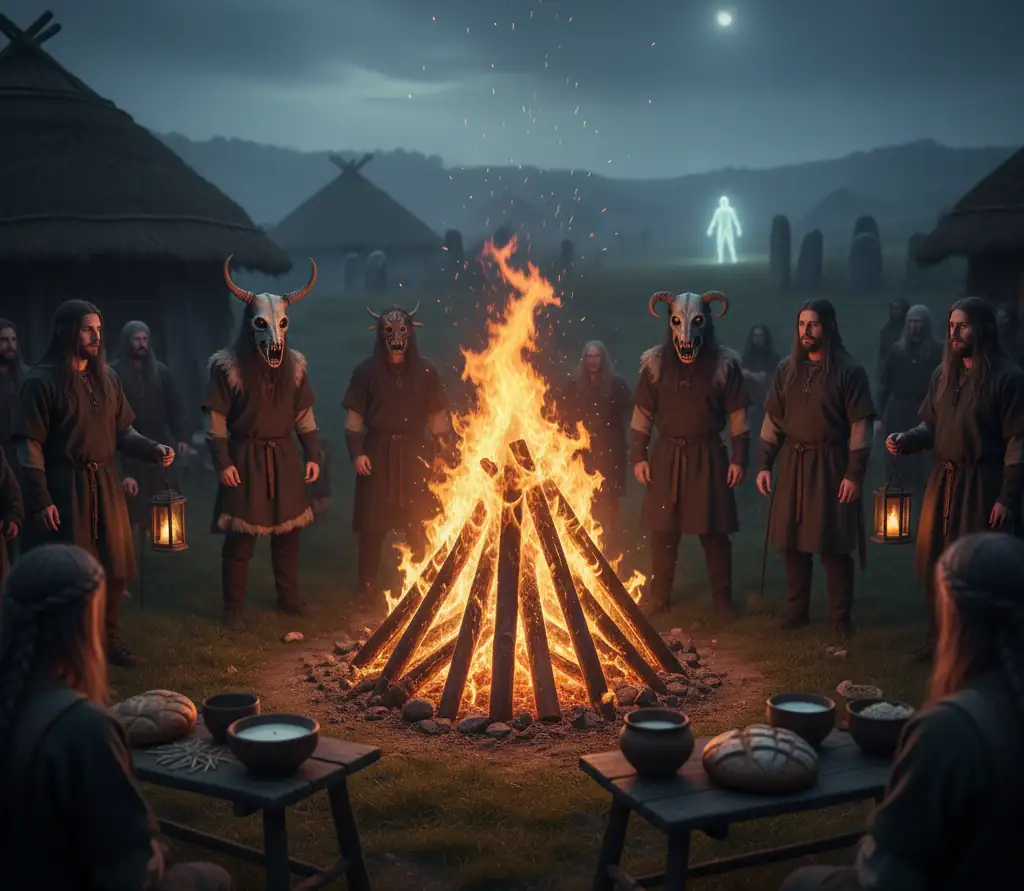
Imagine a cold night, two thousand years ago, in ancient Britain. The harvest was gathered, the summer fires were dying, and a deep chill filled the air. Outside their homes, people wore strange masks made of animal skins and bones, hiding their faces in the darkness. They were waiting. Not for a party, but for a night when the veil between this world and the next was thin—a night when the spirits of the dead might walk among the living.
This old, powerful fear, and the customs that grew from it, are the true roots of the modern celebration we call Halloween. For readers who enjoy classic English novels and stories from Feel Classics, this article explains the true history of Halloween and how it connects to the spooky tales we still love.
Halloween History: The Beginning with Celtic Samhain
The story of Halloween history begins with the Celtic festival of Samhain (pronounced sow-in), celebrated in parts of Britain and Ireland over two thousand years ago. Samhain marked the end of summer and the harvest, and the start of the dark, cold winter—a time deeply linked to death. It was the Celtic New Year, a critical shift from light to dark.
On this special night, it was believed that the wall between the living and the dead became very thin. Because of this, spirits of those who had passed away could cross over. To keep any bad spirits happy, large bonfires were lit, acting as guides and purifiers. Food and drink were also left outside homes. People would also put on disguises, often made from animal skins, to either blend in with the spirits or to hide from them. This old custom is where our modern tradition of Halloween costumes comes from.
How All Hallows’ Eve Was Created
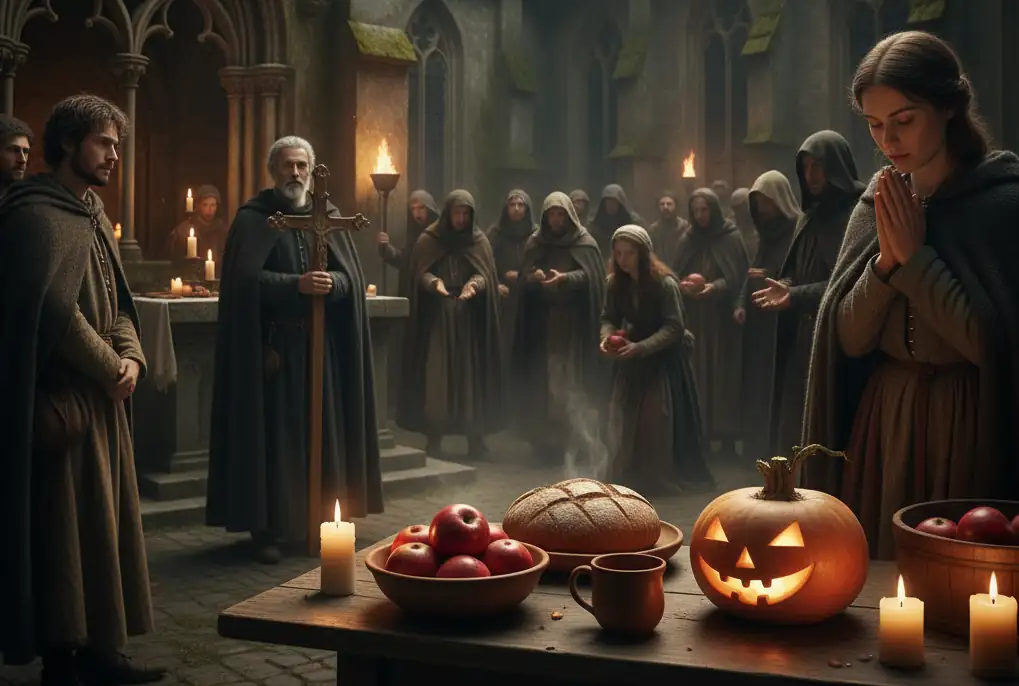
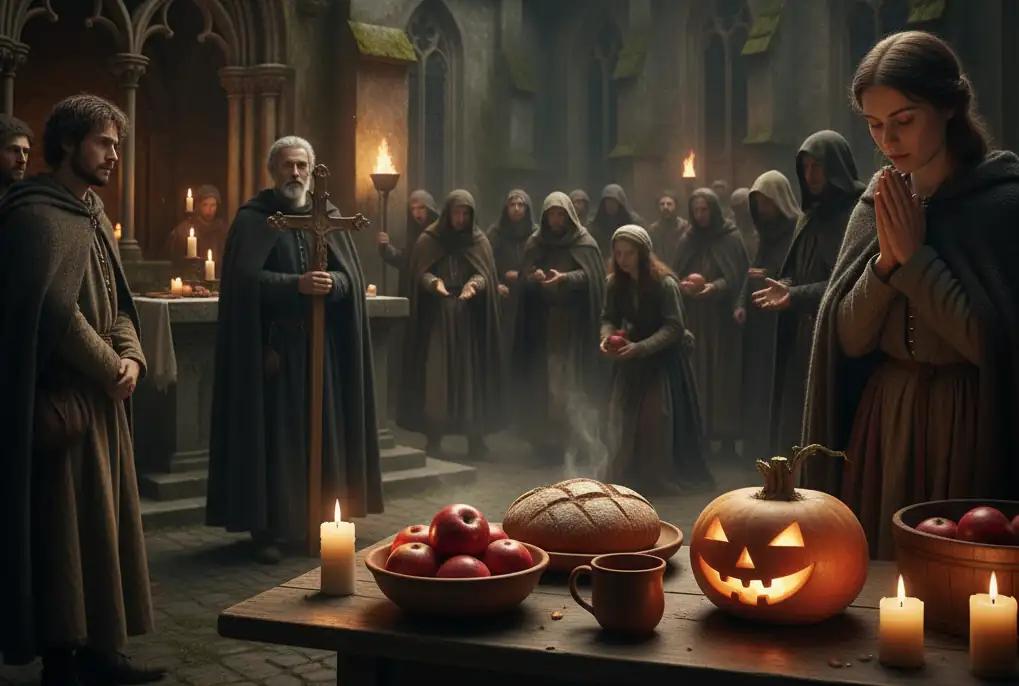
As the Roman Empire grew, its customs mixed with Celtic traditions. Some parts of Roman festivals—like a day for remembering the dead and a festival for the goddess of fruit—slowly blended in. This might be where traditions like apple bobbing began.
Later, the Christian Church also played a big part. In the 7th century, All Saints’ Day was created on 1st November, likely to replace the pagan Samhain celebration. The evening before All Saints’ Day then became known as All Hallows’ Eve, which eventually became ‘Halloween’. All Souls’ Day followed on 2nd November, a time to pray for the souls of the dead. It was then that the custom of ‘souling’ started, where poor people asked for special ‘soul-cakes’ in return for prayers—this is an early version of our modern ‘trick-or-treating’.
From Turnips to Pumpkins: Modern Halloween Significance
After the Reformation, Halloween celebrations became less common in Protestant parts of Britain, often overshadowed by Guy Fawkes Night. However, the traditions were kept alive in Ireland and Scotland. When many Irish and Scottish people moved to North America in the 19th century, they took their rich customs with them.
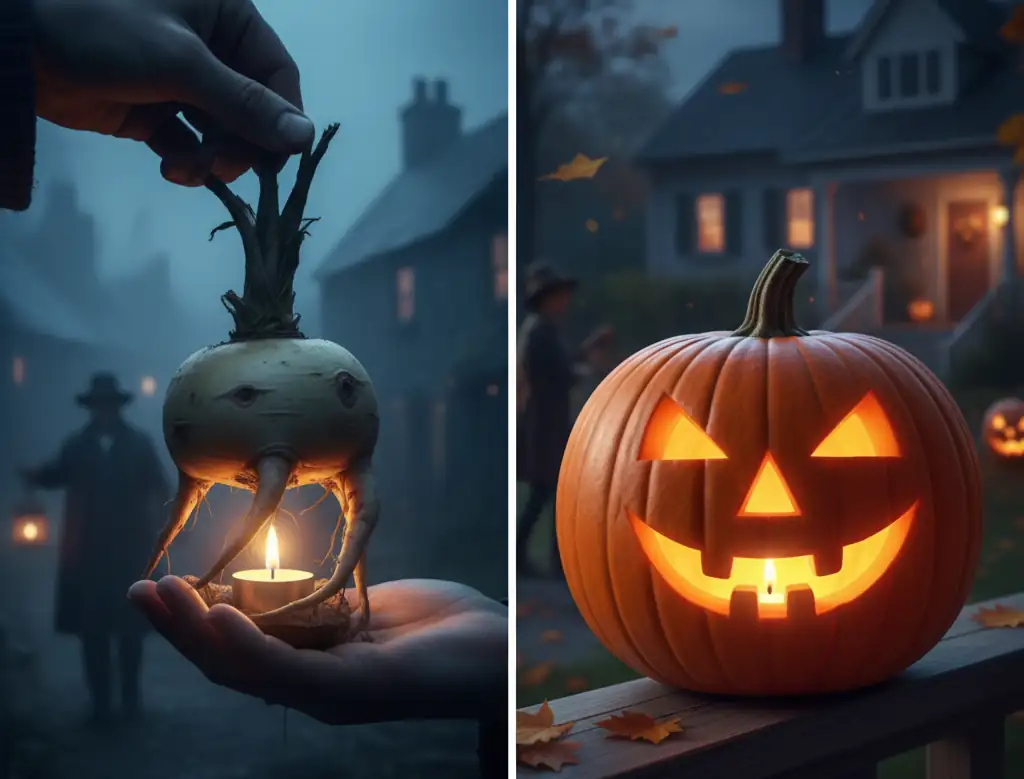
In America, the holiday grew hugely. The Irish custom of carving faces into turnips, which was linked to the folk tale of Stingy Jack, changed. People started using pumpkins instead because they were much bigger and easier to find. This change gave us the famous jack-o’-lantern. The continued importance of Halloween today lies in how these old beliefs about the dead and the change of seasons are celebrated and reinterpreted across time.
Classic English Novels and Stories to Read This Halloween
While modern pop culture has many horror references, the deepest and most lasting chills are often found in the classic literature that inspired them. For the reader who trusts Feel Classics for quality, specific books are perfect for an autumn night:
- Shirley Jackson’s The Haunting of Hill House: This book is seen as a masterpiece of psychological horror. Its fantastic writing and unsettling uncertainty create a deep dread that stays with you. It is a brilliant example of a classic English novel dealing with terror.
- Edith Wharton’s The Return: A great example of a classic spectral short story. It tells the story of a man who encounters the un-ageing ghost of his former fiancée. It is a perfect, chilling choice for a quick read.
- M.R. James’s Ghost Stories: Writers of classic English short stories like M.R. James, whose terrifying tales were traditionally read aloud on Christmas Eve, are now ideal for the Halloween season. Their careful language and focus on horror resulting from academic curiosity are distinctly British.
- Mary Shelley’s Frankenstein: An essential classic English novel that explores the ultimate horror: the creation of life and the terrible neglect that follows. Its themes of life, death, and isolation are central to the old concerns of All Souls’ Eve.
These books ensure that your evening is spent with the most respected and atmospheric writers, honouring the literary heritage of the season.